
By following this guide, you will transform your successful standalone business into a replicable franchise system ready for national expansion. This process typically requires 12 to 18 months of rigorous systemization and legal preparation, but once complete, it unlocks a growth model where franchisees provide the capital and local management needed to scale your brand.
Franchising is not just about adding units; it is a fundamental shift from being the operator of a business to being the builder of a system that others can execute. In a 2026 landscape where over 240,000 franchise units operate across the US, the difference between a stalling brand and a successful one lies in the strength of its underlying infrastructure and its adherence to federal transparency standards. This guide provides the strategic, operations-first roadmap to ensure your business belongs in the latter category.
Outcome
By the end of this process, you will have a legally compliant, operational framework that allows independent business owners to replicate your success. You will transition from managing a single location to governing a brand network, typically achieving a "franchise-ready" status within 12 to 18 months.
Prerequisites: A proven business model with at least two years of profitable history, $50,000–$150,000 in liquid capital for legal/operational setup, a registered trademark, and at least one "prototype" location that operates without the founder’s daily involvement.
Step 1: Audit Your Business for Franchisability
To pass this audit, your business must transition from being founder-led to being system-driven. According to GrowthFactor's analysis of the franchise model, concepts that rely heavily on a single founder's personal expertise or relationships are typically difficult to franchise successfully at scale. You must prove that a third party, with proper training, can achieve the same results in a different geographic market.
Unit Level Economics: You must provide real-time visibility into revenue, labor percentages, and cash flow across entities.
Market Adaptability: If your industry requires high population density, you should target markets with 2-3% annual growth to ensure a stable customer base.
Transferability: Every operational workflow must be documented well enough that a manager can run the site without your daily input.
Success Check: You should now have a financial model showing that a franchisee can achieve a three-year payback period while paying all required royalties.
Step 2: Build Your Legal Foundation (The FDD)
Before you can legally offer a franchise, you must prepare a Franchise Disclosure Document (FDD). Under the FTC’s Franchise Rule, you are required to provide this document to prospective franchisees at least 14 days before any agreement is signed or payment is made.
The FDD is a standardized disclosure containing 23 specific items of material information. These items cover your management experience, litigation history, initial and ongoing fees, and the franchisor’s financial statements. A 2026 enforcement action by the FTC underscores the importance of accuracy in these disclosures; misrepresenting the "typical length of time" to open a studio—such as claiming six months when the reality is over twelve—can lead to significant monetary judgments.
When drafting your FDD, pay close attention to:
Item 19 (Financial Performance Representations): This is where you disclose the historical financial performance of your existing units. While optional, most prospective buyers require these numbers to make an informed decision.
Item 20 (Outlets and Franchisee Information): You must disclose the contact information for current and former franchisees.
Standardized Terms: The FDD ensures that all buyers receive the same information, preventing deceptive marketing practices.
Success Check: You should have a completed, legally reviewed FDD that is ready for registration in "filing" states or use in "non-registration" states.
Step 3: Documenting the "Secret Sauce" (The Operations Manual)
Your operations manual is the strategic asset that makes replication possible. It translates your successful business model into structured, repeatable processes that allow a franchisee—often with no prior industry experience—to deliver a consistent customer experience. Without a robust manual, your brand is vulnerable to "operational drift," where individual locations begin to deviate from your standards.
The manual should function as a practical, daily operating guide rather than a dense legal text. According to Franchising Plus, it must cover everything from opening and closing routines to product preparation and financial reporting. Modern systems increasingly use secure, web-based platforms for these manuals to ensure searchability and real-time version control.
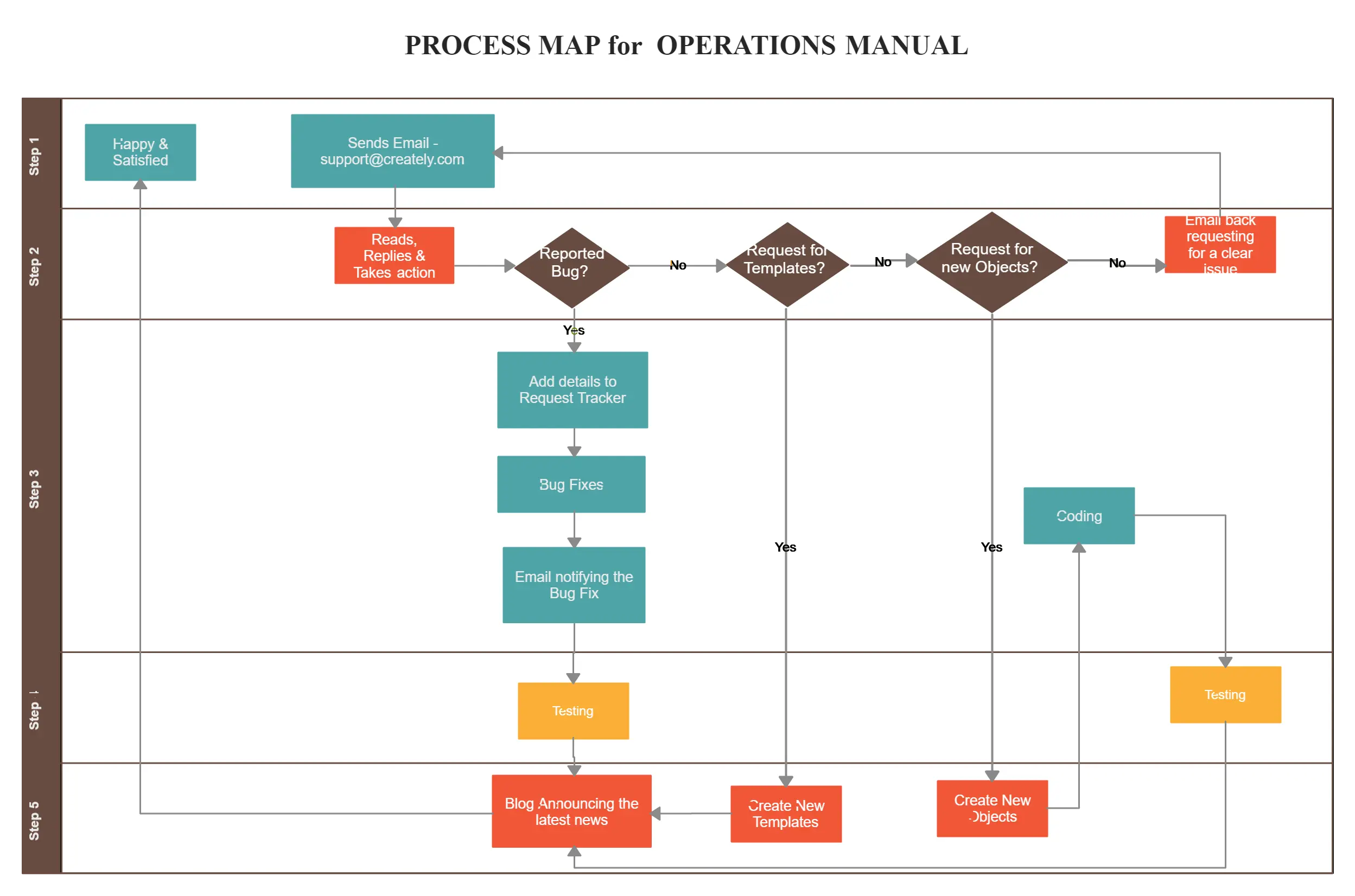
Key chapters every manual must include:
Pre-Opening and Site Selection: Guidelines for choosing a location and managing the build-out.
Daily Operating Procedures: Checklist-driven instructions for store inspections, hygiene checks, and cash reconciliation.
Service and Delivery Standards: Step-by-step scripts and quality control measures to protect brand integrity.
Inventory and Supplier Management: Lists of approved vendors and stock rotation methods to prevent unauthorized sourcing.
Human Resources: Job descriptions, recruitment standards, and disciplinary procedures to help franchisees manage their teams.
Success Check: You should now have a "Company for Dummies" style manual that allows a manager to run a full business cycle without contacting the founder.
Step 4: Building a Replicable Training Infrastructure
Scaling a franchise requires you to build a "business that builds businesses." Your role shifts from operational management to providing the technology and education necessary for others to succeed. A scalable support infrastructure typically falls into three categories: marketing, technology, and operations.
Effective training programs should be multi-modal, combining classroom or virtual instruction with hands-on, on-site training. According to Accurate Franchising, these programs must equip franchisees with the confidence to operate efficiently from day one. You should also implement a Preferred Vendor Network to provide your franchisees with negotiated pricing on equipment and supplies, which further incentivizes their loyalty to your system.
Critical components of your support system include:
POS and CRM Integration: Standardized technology that provides you with real-time visibility into each unit's performance.
Franchise Business Coaches: Consultants who perform regular business reviews and analyze financial KPIs to troubleshoot challenges.
Marketing Toolkits: Providing franchisees with geo-targeted digital ad templates and approved social media assets to maintain brand consistency.
Success Check: You should have an onboarding program that brings a new franchisee to full competency within 90 days of signing their agreement.
Step 5: Recruiting and Selecting Your First Franchisees
The success of your franchise system often depends more on the quality of your first five franchisees than on the brilliance of your business model. Scaling requires being disciplined enough to reject candidates who do not align with your system standards, even when there is pressure to generate early franchise fees. According to the Franchise Manual Podcast, growing too quickly or selecting the wrong operators can damage your brand's reputation and lead to costly legal disputes.
When evaluating candidates, look for individuals who have an owner-operator mentality rather than just a passive investor mindset. Your first franchisees should be "connectors" in their local markets—people who host gatherings and act as a resource within their communities. This local engagement often outperforms expensive marketing campaigns by building strategic referral partnerships with complementary businesses.
Key selection criteria should include:
Financial Capability: Candidates must have the liquid capital for the initial fee—averaging $45,000 per studio in some sectors—plus 6–12 months of operating reserves.
Operational Alignment: A commitment to following your system standards exactly as written in the operations manual. The most successful franchisees are those who prioritize consistency over individual charisma.
Cultural Fit: Individuals who share your brand values and are willing to provide feedback to help you refine the system during its early growth phase.
Success Check: You should have a signed agreement with a franchisee who has passed a background check and demonstrated the financial liquidity to sustain the ramp-up period.
1What happens if my franchisees aren't opening locations as fast as predicted?
This is a common failure mode. Understating the time to open—often claiming six months when reality is over twelve—can lead to legal action and unanticipated costs. Ensure your FDD accurately reflects real-world build-out times to maintain compliance with the FTC's Franchise Rule.
2How can I prevent my brand from becoming inconsistent as I scale?
Operational drift is prevented through a 'living' operations manual and regular field support. Your manual should define System Standards that you can update without rewriting the Franchise Agreement, while business coaches analyze unit-level KPIs to troubleshoot performance issues.
3What should I do if a franchisee wants to transfer their studio?
Your Franchise Agreement should specify the conditions for transfer, including approval of the new buyer and the collection of a transfer fee. This ensures that the new operator meets your financial and cultural standards before taking over the brand.


No comments yet. Be the first to share your thoughts!