Mars Légères: Inside Tunisia’s Iconic Tobacco Brand
Explore the history, blend, and market dominance of Mars Légères. With 0.8mg nicotine and 10mg tar, it remains the state-protected 'Blue Mars' of Tunisia.
Aymen Khelifi • May 12, 2026
Mars Légères stands as the most resilient pillar of the Tunisian tobacco industry, commanding a market share that has remained remarkably stable despite the increasing presence of international luxury brands. Produced by the state-owned Régie Nationale des Tabacs et des Allumettes (RNTA)), these cigarettes represent more than just a consumer good; they are a cultural fixture in Tunisia, balancing domestic agricultural heritage with modern industrial standards.
What Defines the Mars Légères Blend and Market Position?
Mars Légères is characterized by a "light" profile that provides 0.8 mg of nicotine and 10 mg of tar per cigarette, positioning it as a milder alternative to the full-flavor "Mars Inter" variant. The blend primarily utilizes unmanufactured tobacco sourced from Tunisian farmers, though it is often augmented with imported leaves to maintain the consistency of its signature American-blend style. This strategic positioning has allowed it to dominate the mid-tier market segment, where price sensitivity and domestic loyalty intersect.
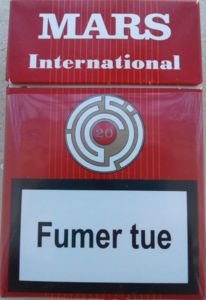
According to specialized market reports from 2026, the tobacco revenue in Tunisia continues to grow, driven significantly by the "Mars" umbrella brand. While high-end smokers may opt for brands like Marlboro or Winston, Mars Légères serves as the "national choice," offering a familiar flavor profile at a price point strictly regulated by the Ministry of Finance. This state control ensures that even as global inflation impacts raw material costs, the price of Mars Légères remains accessible to the average Tunisian consumer.
How Has the RNTA Shaped the Brand’s History?
The history of Mars Légères is inextricably linked to the RNTA, which was legally established in 1964 to consolidate the tobacco trade under state control. Before this period, Tunisian tobacco production was decentralized, influenced heavily by French protectorate standards established as far back as 1891. The creation of "Mars" marked a turning point in Tunisian industrialization, as it was the first brand designed specifically to compete with Western imports by mimicking their packaging and filtration technology.
The RNTA operates as a state monopoly, managing everything from the distribution of seeds to farmers in the northern regions — particularly around Jendouba and Nabeul — to the final retail distribution through licensed "Bureaux de Tabac." This vertical integration has protected Mars Légères from the supply chain shocks that have occasionally crippled other import-dependent sectors in the region.
What Are the Chemical and Sensory Characteristics?
Consumer preference for Mars Légères is largely driven by its specific chemical composition and filtration. Unlike the "Brown" tobacco variants traditional to North Africa in the early 20th century, Mars Légères uses a "Blonde" Virginia-style blend. This shift was essential for the brand's survival during the 1980s and 90s, when consumer tastes moved away from heavy, unfiltered options toward the smoother, filtered experience associated with international brands.
Characteristic | Measurement | Industry Comparison |
|---|---|---|
Nicotine Content | 0.8 mg | Standard for "Light" category in North Africa |
Tar Content | 10 mg | Slightly lower than the 12mg-14mg found in full-flavor domestic brands |
Packaging | 20 pieces, Flip Top | Standardized ISO-compliant warning labels |
Flavor Profile | American Blend | Mild sweetness with a dry finish, intended for all-day use |
The "light" (Légère) designation is achieved through a combination of leaf selection — choosing the upper, lighter parts of the tobacco plant — and ventilation holes in the filter. As noted by cigarette collectors and analysts, the brand has undergone several packaging redesigns to modernization its image, yet the blue-and-white color scheme remains a constant signal of its specific "Légère" identity.
Why Does Mars Légères Remain Culturally Significant?
In Tunisia, Mars Légères is often referred to simply as "Mars Bleu" (Blue Mars) due to its packaging. The tobacco shop, or kiosque, is a central social spot in Tunisian neighborhoods, and the request for "un paquet de Mars" is perhaps the most common transaction in these venues. The brand’s ubiquity has made it a symbol of Tunisian everyday life, surviving political transitions and economic restructuring.
"The Mars brand is more than a product; it is a barometer of the Tunisian economy. When the price of Mars moves, the national conversation moves with it." — Industrial Insight.
Furthermore, the brand supports a massive ecosystem of local labor. From the farmers in sub-humid northern climates to the factory workers in Tunis and Kairouan, Mars Légères is the engine of the Tunisian agricultural value chain. In an era where many state-owned enterprises face privatization pressure, the RNTA's management of the Mars brand continues to be a primary source of tax revenue for the Tunisian treasury.
How Does the Smoking Culture Influence the Economy?
The economic importance of Mars Légères extends beyond tax revenue, acting as a critical component of the Tunisian consumer price index (CPI). Because the state controls the price, any adjustment to the cost of a pack of "Mars Bleu" is a highly sensitive political decision that can impact national social stability. In 2024, the Tunisian National Institute of Statistics (INS) identified tobacco price hikes as a measurable contributor to periodic inflation, highlighting how the brand serves as a baseline for the cost of living for millions of citizens.
The retail structure also supports a vast informal economy. Beyond the officially licensed bureaus de tabac, Mars Légères are often sold individually—a practice known as "vendre par unité"—which allows lower-income smokers to manage daily costs. This micro-transactional economy is a common sight in Tunisian cafes and street corners, further embedding the brand into the daily rhythms of local commerce.
What are the Modern Health and Regulatory Challenges?
In the current 2026 landscape, Mars Légères faces increasing pressure from both national health initiatives and international regulatory frameworks. Tunisia has historically maintained high smoking rates, particularly among adult males, which has prompted the Ministry of Health to implement more rigorous public health campaigns. These initiatives include the periodic updating of health warnings on Mars packaging, which now feature more graphic pictorial representations of the consequences of long-term tobacco use.
Furthermore, the rise of e-cigarettes and heated tobacco products (HTPs) has begun to challenge the traditional cigarette market. While Mars Légères remains the dominant force, the RNTA has had to consider domestic production or licensing of alternative delivery systems to avoid losing market share to foreign technology firms. The challenge for the state monopoly is balancing the high fiscal reliance on combustible tobacco with the growing global consensus on harm reduction.
What is the Future of State-Controlled Tobacco in Tunisia?
The long-term outlook for Mars Légères remains tied to the broader fiscal health of the Tunisian state. As a primary source of liquid revenue, the tobacco monopoly is a "cash cow" that few governments are willing to dismantle. However, the need for modernization is clear. Global supply chain shifts in the mid-2020s have increased the cost of imported raw materials like high-grade Virginia leaves and filtration acetate, forcing the RNTA to invest in local agricultural research to improve the yield and quality of homegrown Tunisian tobacco.
Technical upgrades at the manufacturing plants in Tunis are also underway to meet international ISO standards, ensuring that Mars Légères can continue to be exported to other North African markets. This dual-track strategy—protecting the domestic core while seeking regional growth—is designed to ensure the brand's survival through 2030 and beyond. As long as the cultural preference for European-style blonde blends remains, Mars Légères is expected to hold its ground against global competitors.
Frequently Asked Questions
Is Mars Légères sold outside of Tunisia?
While primarily a domestic brand, Mars Légères is frequently exported to neighboring Libya and Algeria through both formal and informal trade channels. Its reputation for consistent quality among regional "blonde" tobaccos makes it a popular choice across the Maghreb.
What is the difference between Mars Inter and Mars Légères?
Mars International (Inter) is the red-packaged, full-flavor version with higher tar and nicotine levels. Mars Légères (Bleu) is designed for smokers who prefer a less harsh throat hit and a lower chemical density per cigarette.
How is the price of Mars Légères determined?
In Tunisia, the price is not set by market demand but by the government. The Ministry of Finance periodically updates the "Prix des Tabacs" via official decrees, ensuring the brand remains a controlled commodity. This prevents price gouging but also means that any price hike is a significant national news event.
Are there counterfeit versions of Mars Légères?
Due to its high demand and regulated pricing, counterfeit versions sometimes enter the market from neighboring regions. Authenticity is typically verified through the holographic stamps on the packaging and the specific printing quality of the RNTA logo, which are difficult for unauthorized producers to replicate perfectly.
While global trends show a shift toward vaping and smoke-free alternatives, the Tunisian market remains deeply rooted in traditional combustible tobacco. Mars Légères, with its deep historical ties and state-backed manufacturing, is poised to remain the dominant fiscal and cultural force in Tunisia's tobacco landscape for the foreseeable future.