
If you are spending more than four hours a week manually entry-level data or reconciling bank statements, your business is likely losing money through inefficiency rather than gaining it through your DIY efforts. In 2026, the transition from managing your own spreadsheets to hiring a professional bookkeeper is often the most significant lever for scaling a small business sustainably.
While many entrepreneurs view a bookkeeper as an administrative expense, high-growth firms treat them as a strategic asset. According to IRS 2026 recordkeeping guidelines, the burden of proof for all deductions and income lies solely with the taxpayer; a professional bookkeeper ensures that substantiation is systematic rather than reactive.
When does DIY data entry become a liability?
The moment your administrative tasks prevent you from generating revenue, you have reached a tipping point where your self-managed books are a net negative for the business. A bookkeeper typically costs far less than the hourly value of an owner’s time, which should be focused on product development, sales, and customer success.
Beyond the time-value of money, manual errors are a primary risk in early-stage bookkeeping. According to research highlighted by Custom CPA in 2026, businesses that wait until tax season to organize their finances often miss out on eligible credits and deductions because the paper trail has gone cold. A bookkeeper maintains a "live" general ledger, allowing you to see your actual profit margins in real-time rather than guessing based on your bank balance.
What are the specific red flags that you need help now?
Specific operational signals often precede a financial crisis. If any of the following scenarios describe your current workflow, the window for managing your own books has likely closed:
Unreconciled bank statements: You have more than 60 days of transactions that haven't been categorized or matched to your software.
Inconsistent accounts receivable: You aren't sure which clients owe you money or how long their invoices have been outstanding.
Mingled personal and business expenses: You are occasionally using your personal card for business supplies because and intend to "fix it later."
Fear of the data: You avoid looking at your financial statements because you aren't confident the numbers are accurate.
In IRS Publication 334 for 2025/2026, the IRS emphasizes that while you can choose any recordkeeping system, it must "clearly show your income and expenses." If your DIY system requires a weekend of excavation to answer a simple question from a lender or tax authority, it does not meet this standard of clarity.
How does a bookkeeper differ from an accountant?
A bookkeeper manages the daily financial pulse, while an accountant provides the long-term clinical diagnosis. Think of a bookkeeper as the person keeping the ship's log—recording location, fuel usage, and speed—while the accountant is the navigator plotting the course to a distant port.
Comparative Factor | Bookkeeper Role | Accountant (CPA) Role |
|---|---|---|
Primary Frequency | Executes daily or weekly transaction recording and bank reconciliation tasks. | Analyzes financial data on a quarterly or annual basis for high-level strategy. |
Operational Focus | Maintains an accurate general ledger and ensures all documentation is audit-ready. | Interprets financial trends, provides tax planning advice, and prepares returns. |
Cost Structure | Typically bills at a lower hourly rate or fixed monthly fee for recurring work. | Charges a premium for specialized tax knowledge and regulatory compliance expertise. |
According to 2026 industry comparisons, most healthy small businesses eventually need both. A bookkeeper keeps the data "clean" so that the accountant isn't wasting expensive billable hours on basic data entry before they can even begin their analysis.
Why is 2026 technology not a substitute for human review?
Despite the rise of AI-driven accounting software, the need for human oversight has never been higher. While tools can "guess" a transaction category, CPAs in 2026 emphasize that AI still lacks the contextual business judgment to know if a specific $2,000 purchase was a capital asset to be depreciated or a repair to be expensed today.
Automated systems are notoriously bad at handling "gray area" transactions, such as split-use equipment or complex payroll adjustments. A dedicated bookkeeper serves as the quality control layer, ensuring that your automated feeds haven't created a mountain of "uncategorized" transactions that will take weeks to untangle during an audit.
What is the ROI of professional bookkeeping?
The return on investment isn't just found in tax savings; it’s found in decision-making speed. When your books are managed professionally, you can generate a Profit and Loss statement at the click of a button. This allows you to answer critical growth questions: Can I afford to hire a new employee next month? Do I have the cash flow to weather a 15% dip in revenue? Is my most popular product actually my most profitable one?
Without a bookkeeper, these questions are often answered with "gut feelings," which can be fatal for a scaling company. Professional bookkeeping provides the hard data required to secure lines of credit or attract investors. Most lenders in 2026 require at least two years of clean, professionally maintained financial records before approving a significant business loan.
Avoiding the "Tax Season Scramble" and Penalties
A primary financial benefit of a bookkeeper is the avoidance of late fees and interest from regulatory bodies. In 2026, the IRS has significantly increased its automated matching capabilities, meaning discrepancies between filed returns and 1099-K forms are flagged almost instantly. A bookkeeper performs monthly audits of your records, identifying missing invoices or duplicate entries that could trigger a red flag.
Consider the "hidden cost" of the 11th-hour tax prep. When you hand a shoebox of receipts to a CPA in April, they must reconcile 12 months of data under extreme time pressure. This often results in a higher tax preparation fee—sometimes 2x to 3x the standard rate—because of the emergency nature of the work. By contrast, a bookkeeper ensures that come January 1st, your financial package is ready for your tax preparer, allowing you to secure early-filing discounts and ensuring your CPA has time to identify strategic deductions.
Strategic Decision Support
Beyond compliance, a bookkeeper provides the visibility needed for high-stakes business pivots. If you are considering expanding into a second location or launching a new product line in late 2026, you cannot rely on trailing data from last year. You need a 13-week cash flow forecast, which a professional bookkeeper can generate by looking at your current burn rate and accounts payable cycles.
This type of "forward-looking" data is what separates businesses that stall at the six-figure mark from those that break into seven figures. When you have an accurate picture of your customer acquisition cost (CAC) versus your lifetime value (LTV), you can spend marketing dollars with confidence rather than caution. A bookkeeper translates the raw numbers into these meaningful business metrics.
How do you find the right fit for your business?
Hiring a bookkeeper doesn't always mean a full-time employee. Many small businesses thrive using outsourced "fractional" bookkeepers who work 5 to 10 hours a month. When interviewing potential candidates, look for:
Industry experience: A bookkeeper who understands retail inventory is different from one who understands service-based consulting.
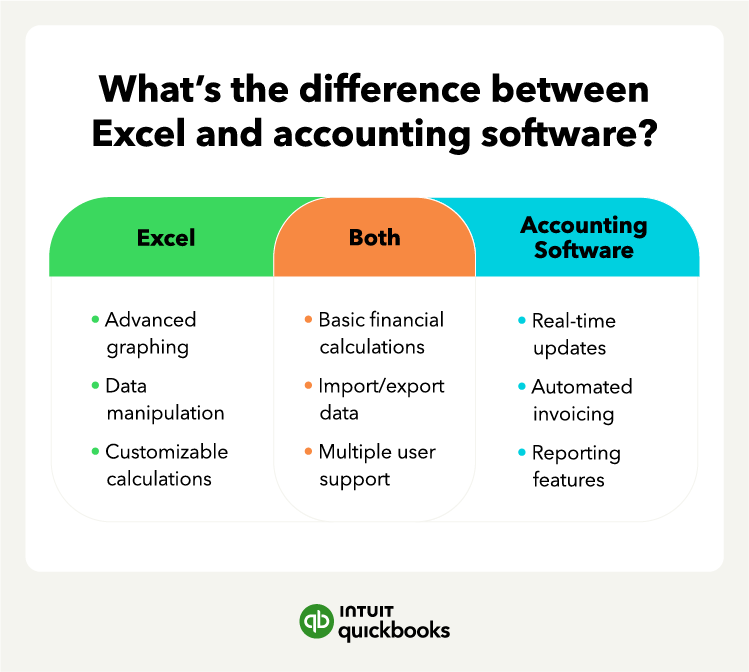
Software proficiency: Ensure they are experts in your specific platform (e.g., QuickBooks, Xero) rather than learning on your dime.
Communication style: You need someone who explains the why behind the numbers, not just someone who emails you a spreadsheet.
Defining the Engagement: Scope of Work
Before you sign a contract with a bookkeeping firm or freelancer, you must define the boundaries of the engagement. Bookkeeping is not a monolithic service; it exists on a spectrum of complexity. At the entry level, a bookkeeper might only handle bank reconciliation and expense categorization. As your business grows, you may need a "Full Charge Bookkeeper" who also handles:
Accounts Payable (AP): Paying your vendors on time to avoid late fees.
Accounts Receivable (AR): Following up on unpaid customer invoices.
Inventory Management: Tracking stock levels and cost of goods sold (COGS).
Sales Tax Compliance: Filing monthly or quarterly returns in multiple jurisdictions.
By defining these needs upfront, you avoid "scope creep"—a common issue where owners expect the bookkeeper to handle administrative tasks like filing or office management that fall outside their financial expertise.
Onboarding: The First 30 Days
The first month of working with a bookkeeper is the most intensive. Expect to spend significant time providing context for historical transactions. A good bookkeeper will perform a "Clean Up" or "Catch Up" project if your previous records are messy. This initial investment is crucial; you cannot build an accurate financial future on a foundation of unorganized past data. During this phase, you will establish your Chart of Accounts, which is the skeleton of your financial reporting. Customize this list to reflect how you actually think about your business, not just how the tax software defaults it.
"A business owner who doesn't understand their Chart of Accounts is like a pilot who doesn't understand their instrument panel. You might be flying, but you don't know if you're about to stall."

Frequently Asked Questions
Can I just use an accountant for everything?
While some accountants offer bookkeeping services, they often charge higher rates for work that a bookkeeper could do more efficiently. Most experts recommend hiring a bookkeeper for the day-to-day and an accountant for tax season.
How much should I expect to pay in 2026?
Rates vary by region and complexity, but fractional bookkeeping services for small businesses typically range from $300 to $1,500 per month depending on transaction volume.
Is it too early to hire if I'm only making $50k a year?
It’s never too early if your complexity is high or your time is better spent elsewhere. If bookkeeping takes you 8 hours a month and you value your time at $100/hr, you're "spending" $800 of your own time. A bookkeeper might do that same work for $400.
What documents do I need to give them?
Typically, they will need "view-only" access to your business bank accounts and credit cards, along with your payroll records and digital copies of receipts for expenses over $75.
Will they handle my payroll too?
Many bookkeepers offer payroll as an add-on service. This is often a wise move, as 2026 IRS Publication 15 highlights strict new requirements for social security and medicare tax reporting that can trigger heavy penalties if missed.


No comments yet. Be the first to share your thoughts!