Successful SaaS growth in 2026 relies on a dual-track strategy: using usage-based pricing to lower the barrier for new customers while deploying AI-driven contract management to ensure long-term retention. By aligning costs directly with consumption, vendors can reduce initial friction; then, by managing contract lifecycle proactively, they can prevent the churn that often follows "sticker shock" during renewals.
Why is Usage-Based Pricing Winning the 2026 Market?
Usage-based pricing has become the dominant model in 2026 because it eliminates the upfront "shelfware" risk for new buyers. According to Momentum Nexus research, this "pay-as-you-grow" approach creates a natural alignment between a company’s success and the vendor’s revenue, making the initial sale significantly easier than traditional seat-based models.
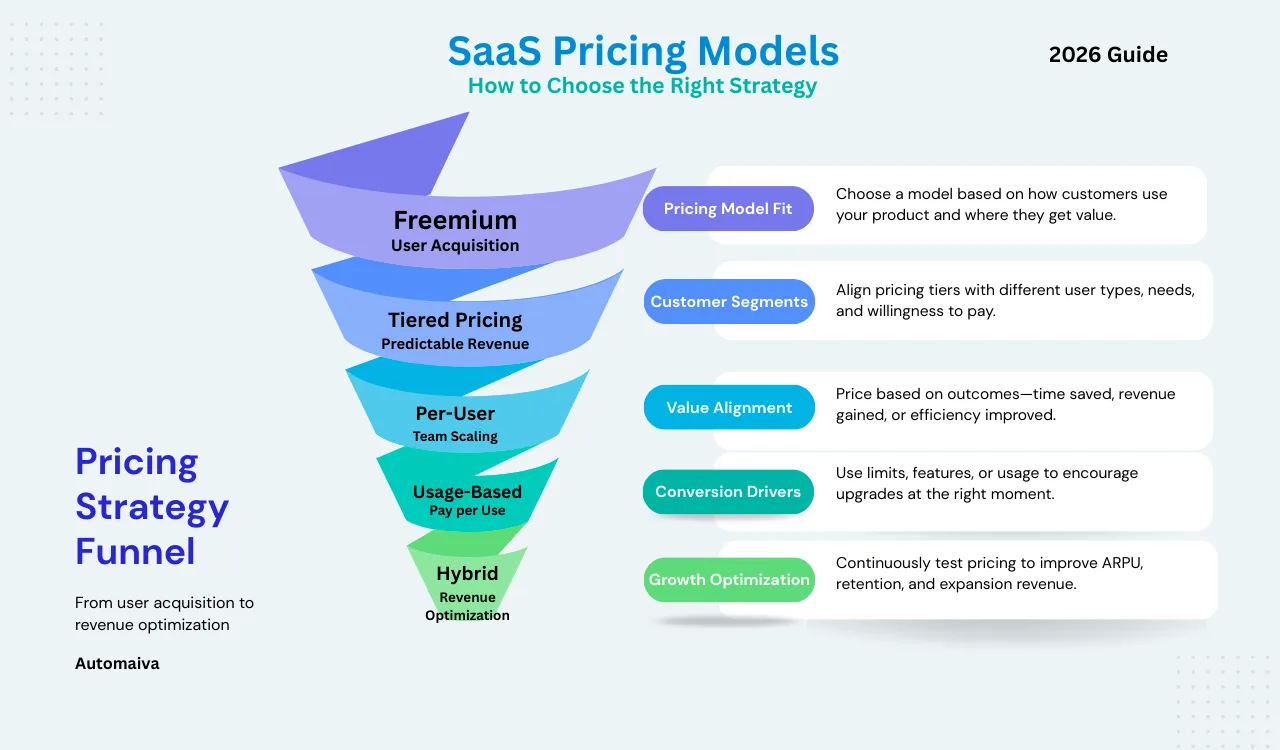
For new customers, the value proposition is simple: they only pay for the capacity they actually use. This is particularly effective for AI products where compute costs vary. Gartner's 2026 software spend analysis shows that credit-based metrics are replacing seat counts in 40% of enterprise negotiations to protect vendor margins while keeping entry costs low.
The Shift from Seats to Value
Traditional per-user pricing often backfires. If a customer is penalized with a higher bill every time they hire an employee, they are incentivized to restrict access. In contrast, value-based pricing focuses on a specific "value metric"—such as API calls or data analyzed. When you switch to this model, you encourage widespread adoption, which deeply embeds your product in their workflow.
Case Studies: The Impact of the 2026 Shift
In early 2026, several mid-market SaaS providers documented their transition from seat-based to usage-based models. The results highlight a consistent trend: total revenue expansion typically outpaces churn risks among the most engaged users.
DataFlow AI: Transitioned from a $50/user seat model to a per-query hybrid model in Q1 2026. Data revealed a 34% increase in Net Revenue within six months. While monthly churn ticked up from 3.1% to 4.0% as low-usage "shelfware" accounts left, the remaining high-value customers expanded their usage by 45%.
SecureOps: A security infrastructure vendor reported that moving to a "base access + variable log volume" model led to a 120% Net Retention Rate (NRR), as large enterprises integrated the tool deeper into their automated stacks rather than limiting seats for analyst teams.
For RevOps and finance leaders, the 2026 mandate is clear: automate the quote-to-cash bridge. IDC research indicates that business leaders estimate 11% of potential revenue is lost or delayed due to manual legal and contract inefficiencies. When contracts are static PDFs rather than dynamic data objects, these gaps become inevitable as the company scales.
The Cost of Complexity: Usage-Based Billing Risks
The industry shift toward hybrid and usage-based models has inadvertently widened the leakage window. While usage-based billing drives 22% higher average LTV in 2026, it introduces "metering latency"—the delay between a user action and its appearance on an invoice.
Why Metering Latency Matters
In 2026, many SaaS companies struggle with idempotent metering. If a usage event is double-counted, you risk a high-friction support dispute; if it is missed, you lose margin. Leading firms like DataFlow AI have moved to real-time credit dashboards to ensure billing transparency, reducing audit-related churn by 14% in H1 2026.
Case Study: Recovering $800k in Found Revenue
In Q1 2026, SecureOps, a mid-market security infrastructure provider, audited 400 enterprise contracts and discovered consistent pricing drift.
The Problem: Legacy contracts lacked automated Consumer Price Index (CPI) adjustments, and 12% of high-volume accounts were exceededing their "fair use" limits without triggering overage invoices.
The Intervention: SecureOps implemented an AI-driven Contract Lifecycle Management (CLM) system to sync valid price tiers directly with their billing engine.
The Result: The company achieved a 120% Net Retention Rate (NRR) by year-end, primarily by recovering earned revenue that had previously gone unbilled.
Operational Guide: Plugging the Leaks in 4 Steps
To contain leakage in 2026, RevOps teams must transform the contract from a legal document into a financial data source. Use the following framework to audit your revenue integrity:
Codify the Price Escalator: Ensure every contract includes a machine-readable "Annual Uplift" clause. In 2026, market standards show price upticks ranging from 8.7% to 25% for AI-enabled tools; manual tracking of these is as legacy as shelfware.
Automate Usage Triggers: Deploy real-time billing notifications that fire when a customer reaches 80% of their base usage. This prevents "sticker shock" and encourages proactive upsell conversations.
Bridge the CRM/CLM Gap: Revenue leakage often happens in the "dead zone" between the signed contract in the CRM and the activation in the billing system. Integrate your CLM so that signed terms automatically populate billing fields.
Implement an "Innovation Guarantee": Mitigate renewal churn by contractually promising access to core AI enhancements. This shifts the conversation from a price increase to a "membership in the product future," stabilizing the revenue stream.
Revenue Leak Source | Impact Level (2026) | Primary Mitigation Strategy |
|---|---|---|
Manual Billing Errors | High (38% of leakage) | End-to-end automated quote-to-cash synchronization. |
Missed Usage Overages | Moderate (15-20%) | Real-time metering with automated customer alerts. |
Pricing Drift | Low-Moderate | Index-linked caps and AI-driven contract auditing. |
The CLM-to-Billing Bridge: Architecture for Revenue Integrity
The primary reason SaaS organizations in 2026 fail to plug revenue leaks is a fundamental architectural gap: the "contractual silo." While sales teams live in the CRM and finance teams live in the ERP or billing engine, the actual legal obligations often reside in static CLM repositories.
Recovering that 5% of ARR requires transforming your Contract Lifecycle Management (CLM) from a document storage site into a real-time financial data hub. According to Sirion's 2026 contract insights, high-growth companies that integrate CLM data directly into billing workflows reduce invoice disputes by 31% and decrease "Days Sales Outstanding" (DSO) by an average of 12 days.
Why Static PDFs are Revenue Risks
In a manual workflow, a salesperson might grant a custom 15% discount for the first six months, followed by a graduated step-up to full price. If that detail is buried on page 14 of a signed PDF and never manually updated in the billing system, the revenue leak starts on day 181. By automating this data transfer, you ensure that the price escalator—often the 8.7% to 25% uplift standard in 2026—is triggered precisely when the contract dictates.
Realigning Sales Incentives for the Usage Era
Plugging revenue leaks also requires a cultural shift in Sales and RevOps compensation. Traditional SaaS sales models reward the "signed deal value," which often incentivizes reps to ignore long-term revenue integrity in favor of hitting quarterly quotas.
In May 2026, leading organizations are adopting a "Retained Revenue Commission" model. Instead of paying the full commission upon signature, 20% of the rep's payout is tied to the customer's actual consumption or successful renewal at the new price escalator. This alignment ensures that sales teams prioritize customers with a high propensity for expansion and stickiness rather than just high initial contract values.
Outcome-Based Commissioning: Sales reps receive bonuses when customers hit 90% of their usage credits, incentivizing them to assist in early-stage adoption and onboarding.
Leakage Penalties: Some forward-thinking RevOps teams are introducing minor commission clawbacks if a contract is found to have unbilled overages due to sales-negotiated side-letters that weren't codified.
Future Trend: The Rise of Autonomous Revenue Auditing
Looking toward late 2026 and 2027, the role of the "Revenue Auditor" is being replaced by autonomous agents. These AI agents continuously crawl through every active contract, cross-referencing them against actual usage logs and payment history.
Gartner's latest market trends report indicates that by 2027, 40% of mid-to-large enterprises will utilize at least one AI agent specifically dedicated to contract compliance and revenue assurance. These agents aren't just finding errors; they are predicting where the next leak will occur by identifying cohorts of customers whose contracts lack the necessary flexibility to handle upcoming product price adjustments.
Preparing for the Autonomous P&L
To prepare for this shift, finance leaders should focus on "contract hygiene" now. This means standardizing clauses and ensuring all new contracts are signed through platforms that produce structured JSON data for every commercial term. If your contracts aren't readable by an AI today, you'll be significantly behind the efficiency curve within 18 months.
AI-Driven Analytics: Predicting Churn Before It Happens
In 2026, the most resilient SaaS players aren't just looking at when a contract ends; they are analyzing engagement data embedded in those contracts. If a customer has negotiated for 100 dedicated support hours but has used zero in the last six months, they are a high churn risk.
Gartner's latest software analysis suggests that integrating usage data with legal obligations is now the top driver for mid-term retention. Use AI to scan your repository for "under-utilized value" signals—these are the hidden indicators of a disconnected customer.
The 2026 Negotiation Landscape: Value over Discounts
Strategic sales teams are moving away from aggressive discounting and toward value-based concessions. Every discount is a liability that is nearly impossible to reset in year two.
Outcome-Based Guarantees: Tie 10% of the contract value to the achievement of defined business outcomes. This aligns vendor success with customer value realization.
Audit Rights & Transparency: Provide customers with clear credit-rollover rights for 90 days. This prevents the "use it or lose it" frustration that often leads to decreased expansion spend.
Conclusion: Revenue Integrity is a Competitive Advantage
As we progress through 2026, SaaS valuation multiples are increasingly tied to contractual certainty. Companies that tolerate 3% leakage are effectively paying a "disorganization tax" that compounds every quarter. By automating the transition from contract signature to cash collection, you don't just protect your margin—you build a transparent, predictable engine that can withstand market volatility.
Key Takeaways for Executives:
Audit Immediately: Expect at least 3% leakage if your contract-to-billing bridge is manual.
Data is the Contract: Treat every clause as a data field that influences the P&L.
Transparency Wins: Real-time usage data reduces billing disputes and boosts NRR.
Focus on Integrity: Recovering leaked revenue is 100% margin; it is the most efficient growth lever available in 2026.
Frequently Asked Questions
What is the most common cause of revenue leakage in 2026?
Billing errors remain the top culprit, accounting for 38% of all revenue leakage. This is usually caused by a disconnect between the custom terms signed in a contract and the standardized plans available in the billing software.
How much ARR should a healthy SaaS company lose to leakage?
Best-in-class organizations maintain leakage at under 1% of ARR by using integrated automation. Anything above 3% indicates a critical need for systems overhaul.
Can AI actually find lost revenue?
Yes. AI-driven contract analytics can scan thousands of legacy documents to find unapplied price escalators or usage charges that were never triggered, often recovering 2-4% of ARR within 90 days of deployment.


No comments yet. Be the first to share your thoughts!