The numbers tell a crowded story. The National Park Service recorded 323 million recreation visits in 2025, across 406 parks—with Zion alone absorbing nearly 5 million visitors and Great Smoky Mountains topping 11.5 million. At ski resorts, the National Ski Areas Association reported 60.4 million skier visits in 2023-24, with season pass holders accounting for 50% of all visits compared to just 31% for standard day tickets. The pattern is clear: frequent visitors who invest in structured access return more, spend less per visit, and experience less friction than those improvising trip by trip.
Most guides tell you to book early and visit off-peak. This one goes further. What separates the visitor who secures Half Dome permits three years running from the one who fails repeatedly is not luck—it is a systematic approach to federal permit systems, an understanding of where premium access genuinely eliminates logistics, and the discipline to use official data rather than hearsay. The strategies below are built on that foundation.
Master the Official Permit Lottery System
Permit lotteries are not random. They reward preparation, and the data proves it. According to NPS Half Dome permit statistics, the daily lottery in 2024 received 35,561 applications—up from 29,292 in 2023—with an overall success rate of 19%. Weekday applications outperformed weekends: 22% vs. 14%. That 8-point gap is not trivial. A visitor who applies exclusively for Tuesday through Thursday slots is working a statistical edge that weekend-focused applicants forfeit entirely.
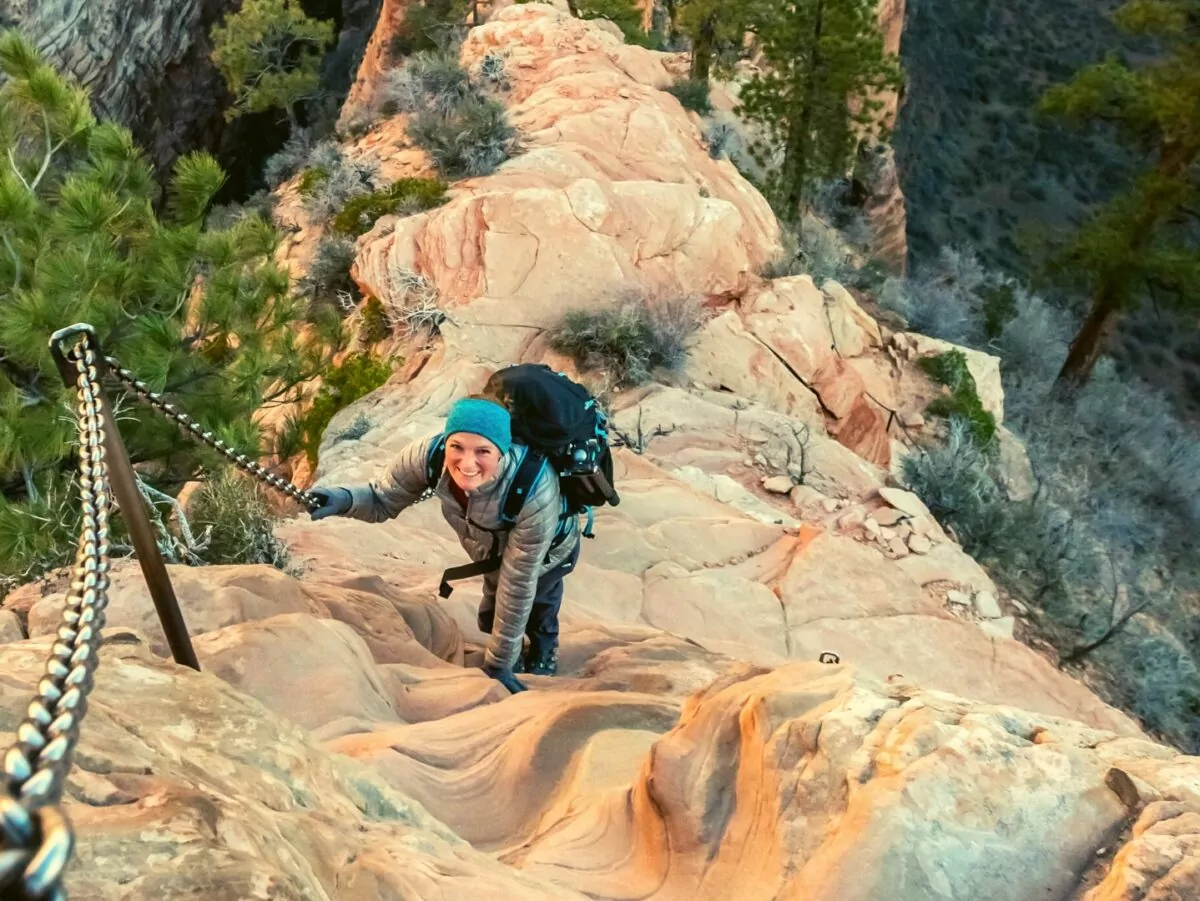
At Zion, the Angels Landing permit program operates on a different structure: four seasonal lotteries per year, supplemented by a day-before lottery window open from 12:01 a.m. to 3 p.m. Mountain Time. NPS data shows Zion issued nearly 200,000 permits in 2022, accommodating approximately 80% of pre-program use levels while measurably reducing trail congestion. The day-before window is the tactical opening most visitors ignore—and where cancellation-tracking services like PermitSnag find consistent availability.
For backcountry permits at Glacier and Yellowstone, lotteries open in March. Both parks reserve walk-up inventory—approximately 30% at Glacier and 25% at Yellowstone—for visitors who arrive in person. That reserve exists precisely because lottery winners frequently cancel or no-show.
2026 Key Lottery Windows at High-Demand Parks | ||||
Park / Trail | Lottery Opens | Results Announced | Walk-Up Availability | Source |
|---|---|---|---|---|
Half Dome, Yosemite | March (preseason) | April | ~50 daily permits | |
Angels Landing, Zion | Quarterly (seasonal) | Within days of close | Day-before lottery | |
Glacier Backcountry | March 15, 2026 | March 17, 2026 | ~30% of campsites | |
Yellowstone Backcountry | March 1–20, 2026 | March 25, 2026 | ~25% of campsites |
Three steps define a winning repeat application strategy. First, create and maintain a Recreation.gov account well before any application window opens—the system requires verified accounts and will cancel duplicate applications. Second, for ranked-choice lotteries like Angels Landing, list up to seven date preferences in genuine priority order; the system allocates permits sequentially and a misranked preference wastes position. Third, download and study Recreation.gov's FY2024 historical reservation data—it shows which dates historically have lower application volumes, giving repeat visitors an evidence-based edge over casual applicants who pick dates arbitrarily.
Leverage Luxury Lodges and Private Tours to Cut Logistics
Permits secure access. Premium accommodation and guided services determine whether that access produces a repeatable experience or an exhausting one. The distinction matters because logistics fatigue—not lack of desire—is what keeps frequent visitors from returning to the same destination.
Private guided tours at major parks offer something no lottery can: certainty of experience. At Zion, Wildland Trekking's private day tours run from $525 per person solo down to $175 per person for groups of six to seven, with guides handling route selection, safety management, and timing—removing the cognitive load that accumulates on self-guided visits. At Yellowstone, Yellowstone National Park Lodges offer private charters starting at $868.50 for an 8-hour car charter (capacity 3) up to $1,930 for the Historic Yellow Bus (capacity 13), with winter snowcoach access available at $2,109.50 for the same season window. These are not tour-bus experiences. They are structured, private itineraries.
On the accommodation side, park-adjacent lodging anchors repeat visits by eliminating the daily commute that degrades experience quality over time. Sunset's guide to high-end national park hotels documents entry points starting at $196 per night for properties like Many Glacier Hotel, with slope-side Four Seasons properties near Yellowstone beginning at $730 per night. According to National Parks Traveler, standard rooms in national park lodges typically run $150 to $350 per night before tax—a range that competes directly with mid-tier urban hotels while placing visitors inside or immediately adjacent to the resource they came for. NPS visitor spending data indicates that two-thirds of all overnight stays by park visitors occur in motels, lodges, or B&Bs rather than campgrounds, suggesting the majority of repeat visitors have already made this calculation.
At elite ski resorts, the model extends further. Destinations like Aspen, Courchevel, and Vail offer ski-in ski-out accommodations with private guide services, helicopter access to untracked terrain, and concierge-managed lift passes—removing every friction point between arrival and first run. For visitors who ski the same resort multiple times per season, these services justify their cost by compressing the preparation overhead that accumulates across repeated standard visits.
VIP Access Options by Site Type: Illustrative Costs | |||
Site Type | Premium Option | Cost Range | What It Removes |
|---|---|---|---|
National Park (Zion) | Private guided day tour | $175–$525/person | Route planning, timing, logistics |
National Park (Yellowstone) | Private charter vehicle | $868–$1,930 / 8 hrs | Transportation, crowd exposure |
Park-adjacent lodge | On-site accommodation | $196–$730+/night | Daily commute, lost morning hours |
Ski resort (luxury) | Ski-in/out + private guide | Varies by resort | Lift queues, terrain selection |
Time Your Returns Using Official Visitation Data
Most visitors pick dates based on weather assumptions and school calendars. Repeat visitors with access to official data do something more precise. The NPS Visitor Use Statistics Dashboard provides monthly visitation estimates dating back to 1979 for many parks—a resource that reveals not just annual totals but intra-year distribution, including which specific months carry above-average loads. Current NPS data shows that 55% of parks experienced above-average visitation in the February-through-June and October-through-December windows, reflecting a structural shift in visitor distribution away from the traditional July-August peak.
That shift creates opportunity. A repeat visitor to Zion in late October operates in a park that received 4,984,525 visitors annually but with a fraction of that crowd concentrated in the shoulder months. The same principle applies at ski resorts: the NSAA's 2023-24 season report noted that season pass holders—who drove 50% of all 60.4 million visits—tend to distribute their visits across the full season rather than concentrating in peak holiday weeks. Holding a season pass is not just a cost play. It is a behavioral signal that correlates with more flexible, lower-congestion visit patterns.
The America the Beautiful Annual Pass, priced at $80 for U.S. residents as of 2026, covers entrance fees across NPS sites, U.S. Forest Service, BLM, and Bureau of Reclamation lands. For any visitor returning to fee-charging parks more than twice per year, the pass pays for itself on the third visit. Its real value, though, is psychological: pass holders arrive without the transactional friction of each visit carrying an entry fee, which measurably lowers the threshold for spontaneous repeat trips.
Standard vs. VIP: What the Data Actually Shows
The comparison between standard and premium access is often framed in terms of comfort. The more accurate frame is reliability. A standard visitor to Half Dome applies with a 19% success rate on weekdays and a 14% rate on weekends. A visitor using a private guide service that holds a USFS commercial outfitter permit—the Forest Service issues over 8,000 such special use permits annually for outfitting and guiding—accesses the same terrain with a pre-secured permit built into the tour cost. The permit problem is already solved.
Standard vs. VIP Access: Key Metrics Compared | ||
Metric | Standard Visitor | VIP / Guided Visitor |
|---|---|---|
Permit access (Half Dome) | 19% daily lottery success | Guide holds commercial permit |
Overnight accommodation | Campground (rising occupancy, flat 2025) | Lodge ($196–$730+/night, stable access) |
Ski access frequency | 31% of all visits (day tickets) | 50% of all visits (season passes) |
Trip planning overhead | Full logistics per visit | Reduced via standing reservations, passes |
Annual pass requirement | Per-entry fee each visit | $80/year America the Beautiful |
Campground occupancy data from the NPS Campground Industry Analysis shows rising demand for reservable sites—with an estimated 39% increase in peak season occupancy between 2014 and recent years—while 2025 campground operator data showed flat or declining summer bookings in Rocky Mountain and High Plains regions. Lodge properties, by contrast, maintained stable pricing and occupancy, partly because their guest base skews toward repeat visitors who book months in advance rather than opportunistic first-timers.
Gear, Local Knowledge, and the Compounding Advantage
Repeat access compounds when paired with accumulated technical knowledge. A visitor returning to Glacier in October needs different gear than one arriving in July—waterproof layers rated for rapid weather shifts, traction devices for early snow on high trails, and layering systems that handle 40-degree temperature swings within a single day. Getting this wrong on a first visit is recoverable. Getting it wrong on a fifth visit, with the expectation of a known trail in changed conditions, is where incidents happen.
Practical preparation for high-performance repeat visits should include:
Seasonal-specific gear audits before each return: trail conditions at Zion's Narrows in March differ categorically from September; proper neoprene socks and drysuits are mandatory, not optional.
Ranger station briefings on arrival, particularly for backcountry permits—rangers hold current trail condition data that no app replicates in real time.
Monitoring Recreation.gov cancellation windows between permit release and trip date; PermitSnag monitors Recreation.gov every two to three minutes and alerts users when cancellations open, with most slots claimed within minutes of release.
Booking lodge or charter accommodations 6 to 12 months out—Yellowstone charter dates from May through October fill well before the season opens, and advance reservations are explicitly recommended by the operator.
Know the rules cold. Hiking Angels Landing without a permit carries a potential fine of up to $5,000 and six months in jail under 36 CFR 1.6. Repeat visitors who internalize permit requirements avoid the compliance friction that derails less-prepared visitors.
The Return Visit as a Repeatable System
Returning to the same high-demand natural site repeatedly is not a matter of preference—it is a matter of infrastructure. The visitors who do it successfully have built a personal system: a Recreation.gov account with historical application data, a standing America the Beautiful pass, lodge or charter bookings placed the moment the prior season ends, and a clear-eyed understanding of which lottery odds are worth chasing on which days of the week.
The data from NPS and NSAA consistently points in the same direction. Season pass holders visit more. Lodge guests return more reliably than campground visitors. Weekday permit applicants succeed at higher rates than weekend applicants. None of these advantages require luck. They require the same approach that works in any high-competition system: study the structure, apply methodically, and invest in the infrastructure that removes friction between intention and access.
The permit is not the obstacle. Treating it as one is.