Buying waterfront in Sarasota is not one purchase but four — and the differences between them decide whether you get the Gulf Coast lifestyle you came for or a repair bill you didn't expect. In 24 years as a Sarasota broker, the buyers who struggle are rarely the ones who underpaid; they're the ones who bought a "waterfront" home without asking which kind of water it fronts, what sits between their house and it, and what the state and insurance markets require them to maintain. This guide walks second-home and luxury buyers through the property types, the regulatory layers, and the boating realities that separate a smart waterfront purchase from an expensive lesson.
What sets Sarasota waterfront apart from the rest of the coast?
Sarasota's waterfront market holds its value because of the lifestyle it supports, not just the views — a boat at the dock ready for the Gulf, morning light across the bay from a lanai, and a shoreline that is genuinely finite (Sarasota Waterfront Homes). The barrier islands — Siesta, Longboat, Casey, Lido, Bird — each carry a different personality, price point, and relationship to the water, which means the island you choose shapes daily life as much as the property type does (Sarasota Waterfront Homes).
The Gulf Coast's demand has also held through market cycles. Sarasota draws both domestic and international buyers, and the steady appreciation of recent years has been driven by population growth, limited inventory, and that scarcity of finished waterfront (Sarasota Waterfront Homes). For a second-home buyer, that scarcity is the single strongest argument for moving deliberately rather than waiting for a "better" deal.
What types of waterfront property does Sarasota offer?
The word "waterfront" in Sarasota covers four genuinely different purchases, and each one changes what you own, what you can dock, and what you'll spend to insure and maintain it (Sarasota Waterfront Homes).
Gulf-front and beachfront properties sit on the western edge of the barrier islands with direct Gulf of Mexico access, unobstructed views, and private or deeded beach access. They are the most dramatic, most finite, and most expensive tier in the market — and once built out, they stay built out (Sarasota Waterfront Homes).
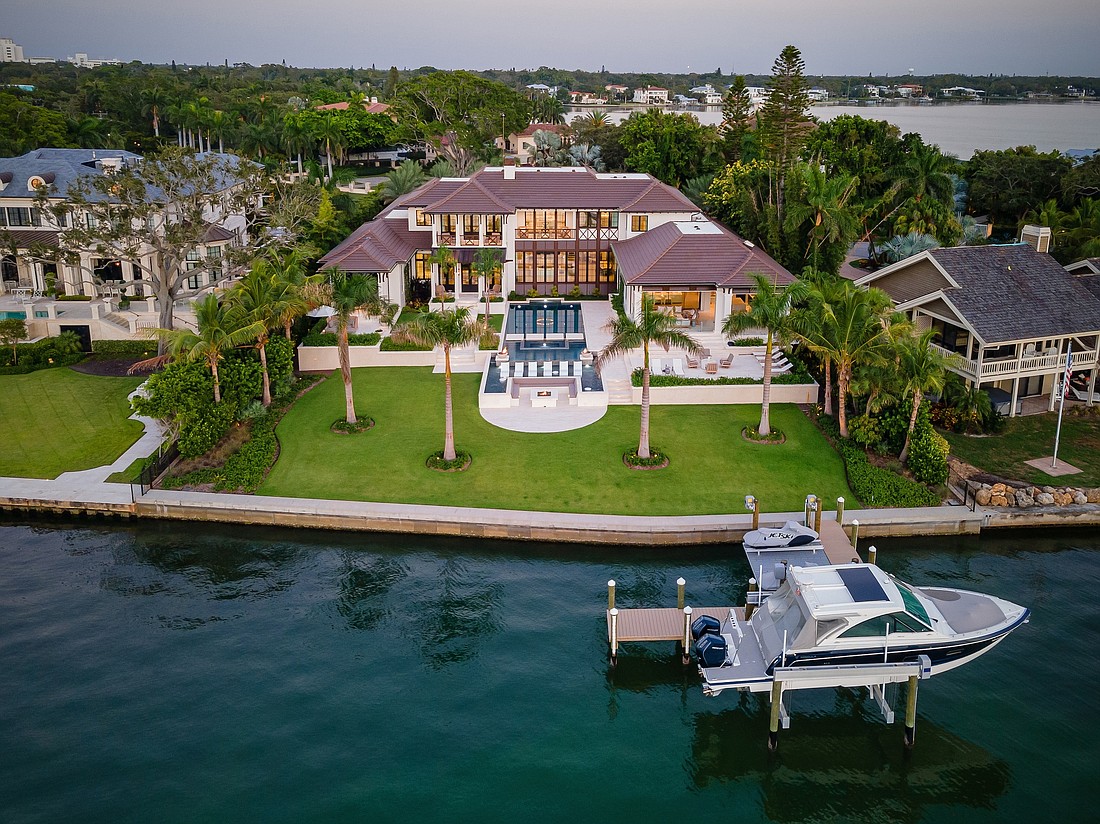
Bayfront and Sarasota Bay homes face calm, protected water on the eastern side of the islands, often with private docks, boat lifts, and direct Intracoastal Waterway access. Serious boaters frequently prefer bayfront over open Gulf frontage: calmer conditions, easier navigation, and immediate access to the Gulf through the passes (Sarasota Waterfront Homes).
Canal-front homes bring the waterfront lifestyle to a wider price range, with private docking and Gulf access through interconnected waterways — but not all canals are equal. Depth, bridge clearance, and distance to open water vary enormously, and a canal that looks ideal on a map can be impractical for anything larger than a small vessel (Sarasota Waterfront Homes).
Intracoastal and bayou properties offer the quietest, most sheltered tier, tucked into native landscaping with a seclusion that open Gulf or bay frontage can't match — often at the best value in the market for buyers who want the water lifestyle without a beachfront price tag (Sarasota Waterfront Homes).
Why does the CCCL matter more than buyers think?
The Coastal Construction Control Line (CCCL) is the single most misunderstood rule in Florida waterfront ownership. It is a jurisdictional boundary, not a line you can't build past — it marks the landward edge of where the state's coastal program reviews construction, and properties seaward of it need permits from the Florida Department of Environmental Protection (Florida DEP). Too many buyers hear "seaward of the CCCL" and walk away from a parcel they could absolutely build on.
The line exists because it marks the part of the beach and dune system that a 100-year storm event can severely disrupt (Florida DEP). Seaward of it, DEP reviews siting and design rather than prohibiting construction — new homes, additions, remodels, and repairs are all allowed, as long as they're permitted or exempt (CCCL Permits). The record of what that permitting achieves is striking: of the structures impacted by Hurricane Opal that had been permitted through the CCCL program, a fraction of one percent were destroyed, versus the far higher share of unpermitted buildings (CCCL Permits).
For a buyer, the practical question is not whether you can build — it's what a future remodel or rebuild will cost in permitting time. Florida law requires a seller of land affected by a coastal construction control line to disclose that fact and, unless you waive it in writing, to provide an affidavit or survey showing the line's location on the property (CCCL Permits). My advice to every buyer: take the survey, don't waive it. The location of the line on your specific parcel is something to know before you're under contract, not after.
How do flood zones and insurance shape the deal?
Every waterfront parcel sits in a FEMA flood zone, and the zone letter changes both your insurance premium and your lender's requirements. The two high-risk designations are AE, which means high flood risk, and VE, which adds high-velocity wave action and carries stricter elevation and construction standards (Vero Beach Barrier-Island Guide). Lenders commonly require flood insurance for parcels in these Special Flood Hazard Areas, and elevated homes can sometimes qualify for more favorable pricing (Vero Beach Barrier-Island Guide).
Two documents tell you most of what you need before writing an offer. The Flood Insurance Rate Map (FIRM) panel shows which zone the parcel sits in, and the elevation certificate records how the finished floor compares to the base flood elevation — the gap between the two is the biggest single driver of your premium (Vero Beach Barrier-Island Guide).
How do you verify a property is actually good for boating?
A "waterfront" home is only as good as your ability to use the water, so for a boating buyer the listing photo is the least reliable piece of evidence you'll get. Before an offer, verify three things about the water itself: depth, bridge clearance, and distance to open water. A canal that looks ideal on paper can be impractical for anything larger than a small vessel, which is why an experienced local agent evaluates real-world boating viability for every canal property rather than trusting the map (Sarasota Waterfront Homes).
Sarasota Bay is the boater's sweet spot for a reason: calm protected water, private docks and boat lifts, and direct access to the Intracoastal Waterway, with the Gulf reachable through the passes. Serious boaters often prefer that over open Gulf frontage, where conditions are rougher and docking is less forgiving (Sarasota Waterfront Homes). On canal property specifically, the marine survey is the document that matters — an experienced marine surveyor inspects the dock and seawall condition and verifies boat slip regulations that a standard home inspection never touches (10 Best Neighborhoods in Sarasota).
What should you check before writing an offer?
Waterfront buying rewards a short, disciplined checklist over any single dramatic feature. Work through these before you commit, and you'll sidestep the most common (and most expensive) mistakes:
Get the marine survey and inspect the dock and seawall condition, plus any boat slip regulations (10 Best Neighborhoods in Sarasota).
Waterfront Sarasota is a finite, resilient market, and the buyers who love it most are the ones who understood which kind of water they were buying before they signed. The right property — the one that matches your boat, your budget for insurance, and the version of coastal life you actually want — is out there. Getting there is about asking the right questions up front, and that's where local, waterfront-specific experience earns its keep.
No comments yet. Be the first to share your thoughts!