
Home prices for the remainder of 2026 are projected to experience modest growth and stabilization as the market shifts away from the high-volatility era of previous years. National forecasts from organizations like the National Association of Realtors (NAR) and Fannie Mae indicate that while the "runaway" appreciation of the early 2020s is over, a lack of inventory coupled with slightly improved mortgage rates will keep prices on a steady upward trajectory.
What is the national outlook for home prices in 2026?
National home prices are expected to rise between 2.1% and 4.0% through the end of 2026, depending on how quickly mortgage rates and inventory levels adjust. While some aggressive forecasters previously anticipated a sharper correction, the persistence of the "lock-in effect"—where homeowners are reluctant to trade their low pandemic-era mortgage rates for current ones—continues to keep supply tight enough to support price floors.
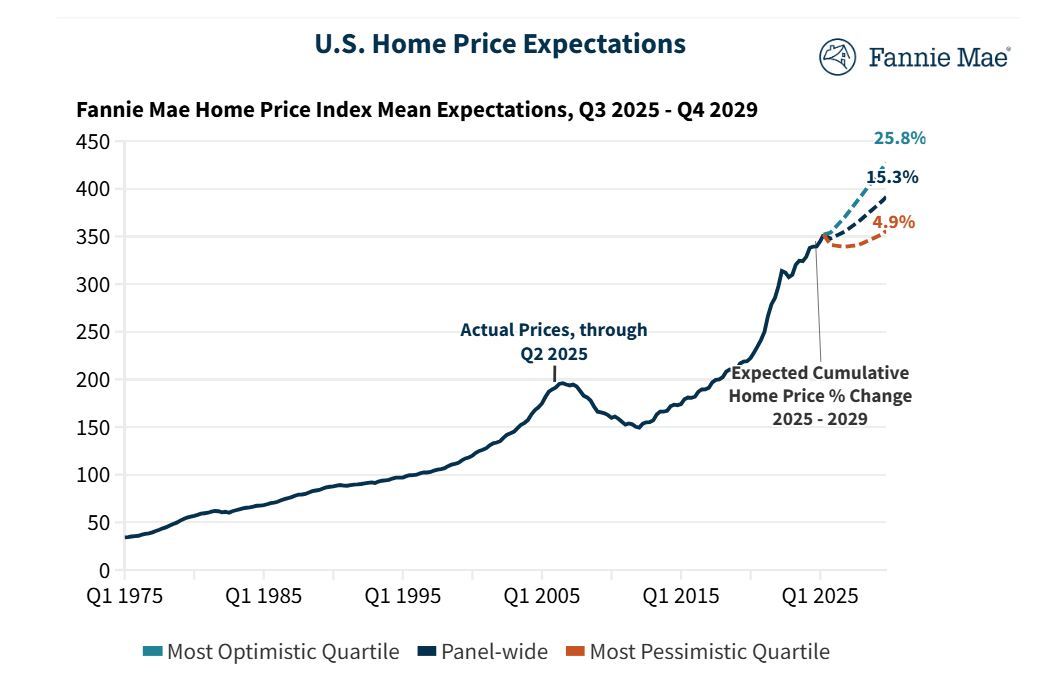
According to NAR Chief Economist Dr. Lawrence Yun, the housing market should improve modestly in the second half of 2026 as inventory and housing supply continue to expand. NAR specifically forecasts a 4% increase in existing home sales by year-end, signaling a return to a more rhythmic and predictable market cycle.
How will mortgage rates impact the 2026 market?
Mortgage rates are forecast to average roughly 6.3% for the remainder of 2026, according to data from Realtor.com. This represents a meaningful, if slow, reduction from the peaks seen in late 2023 and 2024. This easing of affordability pressures is expected to pull more buyers off the sidelines who have been waiting for "the right time" to re-enter the market.
However, many experts caution that a drop to 6% is a psychological threshold. While a drop to 6% could unlock 5.5 million additional buyers, it also has the potential to increase competition, which may cancel out some of the affordability gains if multiple-offer situations become the norm again. For sellers, this means the pool of qualified buyers is growing, but buyers remain highly sensitive to overpricing.
Forecaster | 2026 Home Price Projection | Inventory Outlook |
|---|---|---|
National Association of Realtors | +4.0% | Gradual expansion expected and necessary for growth. |
Realtor.com | +2.2% | Inventory to recover by nearly 9% year-over-year. |
HouseCanary | +2.1% | 4.59 months of supply, still under healthy levels. |
Mortgage Bankers Association | Under +1.0% | Expects a flatter growth curve as demand moderates. |
What do West Des Moines homeowners need to know?
The local market in West Des Moines remains exceptionally resilient compared to national averages, with home values currently averaging around $326,596 as of July 2026. While local appreciation has been measured at a modest 0.8% over the past year, this stability is actually a sign of a healthy, "balanced" market where both buyers and sellers can transact with confidence.
In West Des Moines, homes priced between $350,000 and $1 million are currently sitting in a balanced territory of 3 to 5.4 months of inventory. This "sweet spot" means sellers who price correctly are seeing steady movement, while buyers are not being forced into the frantic, high-pressure bidding wars that characterized previous years. Local demand remains supported by West Des Moines' strong employment base and continued desirability as a regional hub.
What specific factors are shaping the Des Moines metro area?
The Des Moines metro, particularly West Des Moines and Waukee, continues to outperform many mid-sized Midwestern markets due to a diversified local economy led by insurance, financial services, and the burgeoning technology sector. While major coastal hubs may see price corrections due to overvaluation, West Des Moines maintains a "value-driven" market appeal. According to local market reports, the steady influx of regional relocation—professionals moving for the lower cost of living combined with high quality of life—provides a consistent floor for demand that national headlines often overlook.
Furthermore, the local construction pipeline specifically in the Western suburbs is beginning to address the supply gap, though not fast enough to switch to a buyer’s market. New construction homes in communities like Ashworth Grove or Kettlestone Ridge are coming online, but at price points that remain elevated due to material and labor costs. This means the existing home market remains the primary battleground for first-time and trade-up buyers, keeping competition healthy for sellers who have maintained their properties well.
How can buyers and sellers strategically position themselves?
Success in the late 2026 market requires a shift in mindset from the "frenzy" of yesterday to a marathon-style strategy. For sellers, the key takeaway is that buyers are now much more selective. With mortgage rates hovering in the 6% range, buyers are performing more due diligence and are less likely to waive inspections or overlook repairs. Professional staging and strategic "light renovations"—such as modernizing fixtures or fresh neutral paint—are yielding higher returns now than they did when inventory was at record lows.
For buyers, the stabilization of prices combined with slightly higher inventory offers a rare window of opportunity. Unlike 2023, you now have the power of choice and time. Most homes in the West Des Moines area are staying on the market for 20 to 45 days, according to Redfin market trends, giving you the ability to conduct a thorough home inspection and negotiate terms without the immediate threat of a dozen competing offers within the first hour. The goal for the rest of 2026 isn't to "time the bottom"—it's to secure a home that fits your long-term life goals while rates are predictable.
The long-term perspective: What happens after 2026?
Looking beyond the current year, the Fannie Mae housing forecast through 2026 suggests a gradual "normalization" of the industry. The housing market is a massive ship that turns slowly; the adjustments we are seeing now in 2026 are the final stages of the post-pandemic correction. As we move into 2027, the gap between supply and demand is expected to narrow further as more homeowners eventually move for traditional reasons—job changes, marriage, and family growth—which will finally loosen the lock-in effect on supply.
Investors and homeowners alike should view the current stability as a positive sign. A market that grows sustainably at modest rates is far healthier for the long-term economy than one that spikes 15% in a single year only to plateau for three. By the end of 2026, the housing market will likely be defined not by volatility or crisis, but by its resilience and the return of the "traditional" real estate cycle. For those living in West Des Moines, the outlook remains bright, anchored by a community that continues to grow and invest in its future.
Why is inventory still the primary market driver?
Inventory remains the "X factor" of 2026; without a significant increase in homes for sale, prices cannot realistically fall. Current data indicates that the market currently holds 4.59 months of supply, which is still below the 5 to 6 months required for a truly balanced market. This scarcity is what prevents a significant price correction, even if buyer demand fluctuates due to rate changes.
For the back half of the year, expect to see:
Increasing for-sale inventory: National inventory is projected to recover by nearly 9%, easing the extreme scarcity of some neighborhoods.
Improved sales volume: After 2025’s near 30-year low in transaction volume, sales are expected to climb by 1.7% as the market finds its footing.
Normalization of "days on market": The rapid-fire sales of the post-pandemic boom are over; a return to traditional seasonal rhythms is the new standard.
Frequently Asked Questions
Should I wait for mortgage rates to hit 5% before buying?
Waiting for 5% may be a gamble. While rates are easing, most forecasts see them staying in the low-to-mid 6% range through the end of 2026. If rates did drop to 5%, the sudden surge in buyer demand would likely drive home prices up, potentially costing you more in the long run than the interest savings would recover.
Is the housing market going to crash in late 2026?
Most economists expect the U.S. to avoid a recession and do not see the conditions for a crash. Unlike the 2008 crisis, the current market is supported by high buyer equity and a structural shortage of housing rather than subprime lending.
How does West Des Moines compare to the national market?
West Des Moines often proves more stable than coastal markets. While some regions are seeing price volatility, West Des Moines maintains steady, modest growth supported by local inventory that is moving toward a healthy balance between $350K and $1M.


No comments yet. Be the first to share your thoughts!