If you are waiting for a massive stack of cash before you start house hunting in Central Texas, you might be waiting for a day that doesn't need to come. As a mortgage loan officer in Round Rock, I hear the same thing every week: "Josh, I’d love to buy, but I just don't have the 20% down yet."
The 20% down payment is a relic of the past, not a requirement for 2026. In fact, with the median sales price in the Austin metro sitting at $412,000 as of early 2026, very few first-time buyers are bringing $82,000 to the closing table. Most of my clients are entering their first homes with as little as 3% down—and in many cases, state-backed programs cover those costs entirely. While mortgage rates and prices fluctuate, waiting specifically to hit a 20% threshold often costs more in lost equity and rising rents than the cost of mortgage insurance itself.
What are the best low-down-payment options in 2026?
Modern mortgage programs are specifically designed to help first-time buyers enter the market without draining their life savings. The two most popular paths are FHA loans and Conventional 97 programs, and choosing between them depends largely on your credit profile and long-term goals.
For most buyers, the choice comes down to these two:
FHA Loans (3.5% Down): These are the gold standard for flexibility. If your credit score is in the 580–640 range, an FHA loan is often your best bet because it allows for higher debt-to-income ratios.
Conventional 3% (Fannie Mae/Freddie Mac): If your credit score is 680 or higher, you can qualify for programs like Freddie Mac’s Home Possible® which requires only 3% down. The major perk here is that mortgage insurance (PMI) isn't permanent.
Feature | FHA Loan | Conventional (3% Down) | Conventional (20% Down) |
|---|---|---|---|
Typical Interest Rate | 6.50% Market Rate | 6.50% Market Rate | 6.50% Market Rate |
Estimated APR | 7.15% (Inc. MIP) | 6.81% APR | 6.74% APR |
Minimum Down Payment | 3.5% of purchase price | 3.0% of purchase price | 20% of purchase price |
Mortgage Insurance | Required for life of loan | Removable at 20% equity | None Required |
Primary Advantage | High debt-to-income limits | Lowest entry cost for high credit | Lowest monthly payment |
How can Texas DPA programs cover your down payment?
Texas offers some of the most robust Down Payment Assistance (DPA) programs in the country, specifically through the Texas State Affordable Housing Corporation (TSAHC) and the Texas Department of Housing and Community Affairs (TDHCA). These aren't just for "low-income" buyers; they are designed for the workforce of Central Texas.
In Travis and Williamson County, programs like "My First Texas Home" can provide a 0% interest second lien that covers up to 5% of your loan amount. In many cases, this is "set-aside" or forgivable after a few years of living in the home. This means you could potentially walk into a Round Rock neighborhood with zero out-of-pocket for your down payment, using your saved cash instead for closing costs or mid-summer AC repairs.
Why is waiting for 20% often a mistake?
Waiting for a 20% down payment is the single biggest financial trap for renters in Austin. While you work to save that large sum, home prices and rents typically rise faster than your savings account grows.
If you save $1,000 a month toward a down payment, it will take you nearly seven years to reach $82,000 for a $410,000 home. In that same window, if Austin home prices appreciate by even 3% annually, that house will cost over $500,000. Your target 20% down payment will have moved from $82,000 to $100,000—outpacing your efforts. By buying now with 3% down, you capture that appreciation as equity instead of watching it become a higher price tag.
The Renter's Dilemma: Rising Rents vs. Mortgage Stability
When you choose to keep renting while saving for a 20% down payment, you aren't just missing out on equity; you are exposing yourself to the volatility of the Austin-area rental market. Over the last decade, Central Texas has consistently seen rent hikes that outpace standard cost-of-living adjustments. By locking in a fixed-rate mortgage now—even with a low down payment—you essentially "freeze" your housing cost. While property taxes and insurance may fluctuate, your principal and interest remain the same for 30 years.
Compare that to the lifestyle of a renter in 2026, where an apartment in Round Rock or Cedar Park can see significant increases year-over-year. Over five years, that's thousands of dollars in "lost" money that provides zero return. When you buy with 3% down, your monthly payment essentially becomes a forced savings account. A portion of every check goes toward paying down your own debt rather than your landlord's mortgage.
Wealth Gaps and the Power of Compounding Equity
In 2026, the wealth gap between homeowners and renters in Texas continues to widen. The primary driver is not the initial down payment, but the duration of ownership. A homeowner who buys today at $350,000 with a $10,500 down payment doesn't just benefit from the 3% down; they benefit from 100% of the home's appreciation.
If that home grows in value by just $15,000 in its first year, the owner has effectively earned a 140% return on their initial $10,500 investment. A renter who waits and keeps that $10,500 in a standard savings account might earn $400 in interest in that same year. In the Austin-Round Rock corridor, real estate isn't just a place to live—it's historically been one of the most reliable wealth-building engines available to middle-class families.
Understanding "Opportunity Cost" in Central Texas
Opportunity cost is the loss of potential gain from other alternatives when one alternative is chosen. When you choose to wait, the opportunity cost is the house you could have owned at 2026 prices. We often look back at 2018 or 2019 prices in Austin and wish we had bought then. The reality is that in 2030, we will likely look back at 2026 prices with the same sentiment.
By utilizing local programs like TSAHC mortgage credit certificates, you can offset the initial costs of homeownership. These tools exist specifically to prevent the local workforce—our teachers, nurses, and first responders—from being priced out of the very communities they serve. Waiting for a "perfect" 20% down payment often results in being forced to move further away from your job and community just to find something affordable.
What does a $350k home look like in Round Rock today?
Buying a $350,000 home today requires significantly less cash than many first-time buyers realize. Choosing a low-down-payment route allows you to preserve your savings while locking in a fixed housing cost.
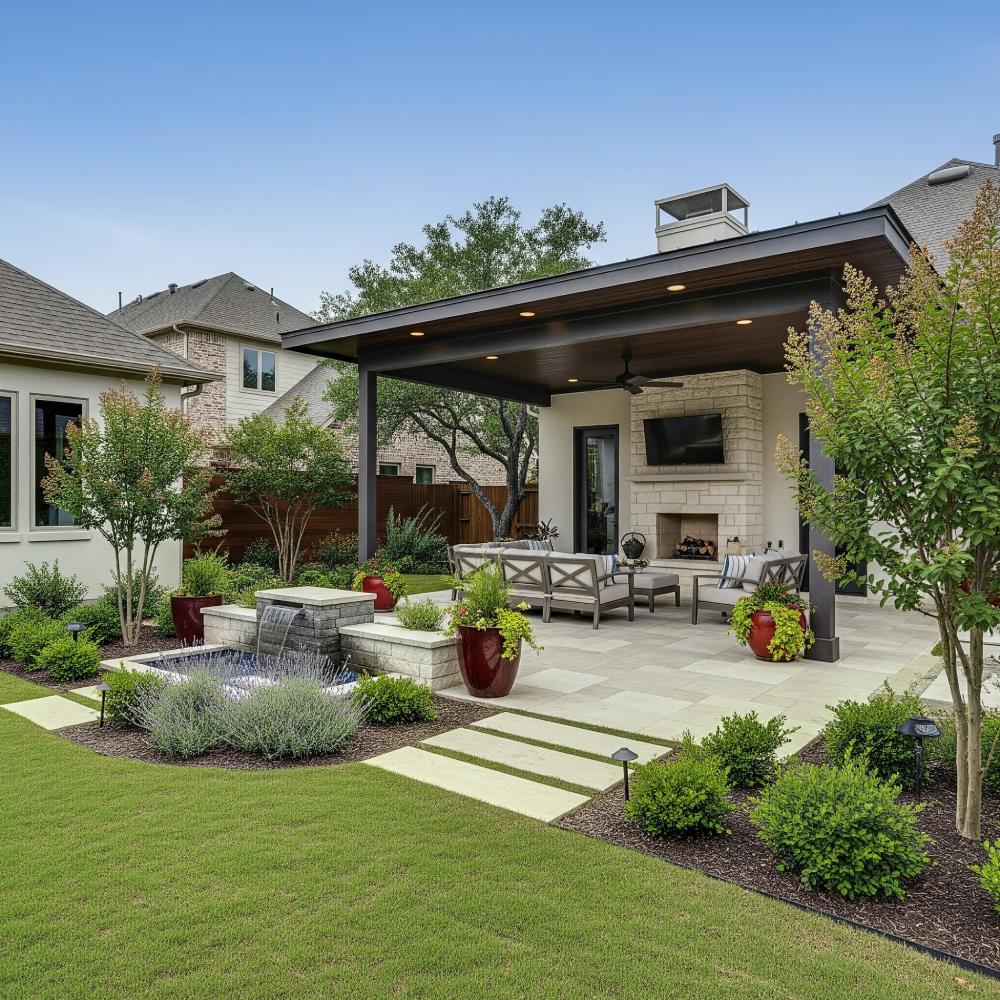
Let’s look at a real-world scenario for a starter home or a townhome in the Round Rock/Pflugerville area priced at $350,000.
If you use a Conventional 3% down program at a 6.5% market rate (6.81% APR), your down payment is just $10,500. Compare that to the $70,000 you would need for a 20% down payment. By choosing the low-down-payment route, you keep $59,500 in your pocket for emergencies or modernizing your new kitchen.
While your monthly payment is higher, the "cost of credit" represented by the APR is only 0.07% higher than the 20% down scenario. This small difference is the price you pay for liquidity—and it is often far less than the annual rent increases we’ve seen in Central Texas over the last several years.
Pro Tip: Lower Your Monthly Payment with the Homestead Exemption In 2026, the Texas homestead exemption for school district taxes has increased to $140,000. This isn't just for Round Rock or Austin—this mandatory tax break is available in every county across Texas. By filing for this exemption on your primary residence, you can effectively lower your taxable home value, directly reducing your monthly escrow payment and making homeownership even more affordable.
A Closer Look at the Total Cash Needed
Many buyers get hyper-focused on the down payment and forget about closing costs. In Texas, closing costs (taxes, title fees, lender fees, and escrow prep) typically run between 2% and 3% of the purchase price. On a $350,000 home, that’s another $7,000 to $10,500.
However, even if you are using a low-down-payment program, there are ways to minimize this out-of-pocket expense:
Seller Concessions: In a balanced market like we have in 2026, it is common to ask a seller to contribute 1% to 2% toward your closing costs.
Lender Credits: Depending on the interest rate you choose, your lender may be able to provide a credit to cover a portion of your one-time fees.
DPA Overages: Some Texas assistance programs allow you to use the funds for both down payment and closing costs, potentially bringing your total cash-to-close under $5,000 for a $350k home.
The Value of Having "Cash in the Bank"
One of the most dangerous things a first-time buyer can do is empty their entire savings account to hit a 20% down payment goal. Life happens—water heaters leak, cars need tires, and jobs change. By choosing a 3% or 3.5% down payment, you preserve your liquidity.
A family that buys with $10,000 down and keeps $30,000 in an emergency fund is in a much stronger financial position than a family that puts down $80,000 and has $0 left. In the mortgage world, we call this "reserves," and having them ensures that you aren't just a homeowner, but a successful homeowner who can handle the ups and downs of property maintenance without stress.
Let’s run the real numbers
Every situation is unique, and "the myth of 20%" shouldn't be what keeps you from building wealth through real estate.
If you’re ready to see what you actually qualify for—and which Texas assistance programs could help you close the gap—I’m here to help. Reach out to me at Info@PenlandTeam.com, and let’s sit down to see how close you actually are to your own set of keys.
Check My First Texas Home Eligibility
What is the biggest thing holding you back from buying a home in the Austin-Round Rock area right now? Drop a comment below—I’d love to answer your specific mortgage questions.
If you found this guide helpful, please share it with a friend who is tired of paying rent!
Frequently Asked Questions
Can I use down payment assistance with a conventional loan?
Yes. Many Texas programs like TSAHC and TDHCA allow you to pair their assistance with both FHA and Conventional financing, provided you meet the credit score and income requirements for those specific programs.
Does using a low down payment make my offer less competitive in Austin?
While 20% down used to be a sign of "strength," the 2026 Austin market has shifted into a more balanced phase. Sellers are much more interested in a buyer's pre-approval and ability to close than the size of the down payment, especially when paired with a reliable local lender.
Are there income limits for Texas first-time buyer programs?
Most assistance programs do have income limits, but they are adjusted based on the county median income. In the Austin-Round Rock MSA, these limits are often high enough to include many mid-career professionals and many two-income households.
Your Low-Down-Payment Success Checklist
Before you start touring homes in Round Rock or Austin, use this checklist to ensure your finances are optimized for a low-down-payment program:
Check Your Credit Score: Aim for 680+ to unlock the 3% Conventional programs. If you're between 580 and 640, we will look closer at FHA options.
Document Your Income: Gather your last two years of W2s and your most recent 30 days of paystubs. Texas DPA programs are meticulous about income verification.
Identify "Gift Funds": Many low-down-payment programs allow family members to gift you the cash for your down payment or closing costs.
Get a Local Pre-Approval: Austin-area sellers highly value letters from local lenders who understand the specific property tax and insurance landscape of Central Texas.
Calculate Your "Reserve" Goal: Try to have at least 2–3 months of housing payments left in your bank account after closing to ensure you're protected from unexpected maintenance.

Discussion